Introduction
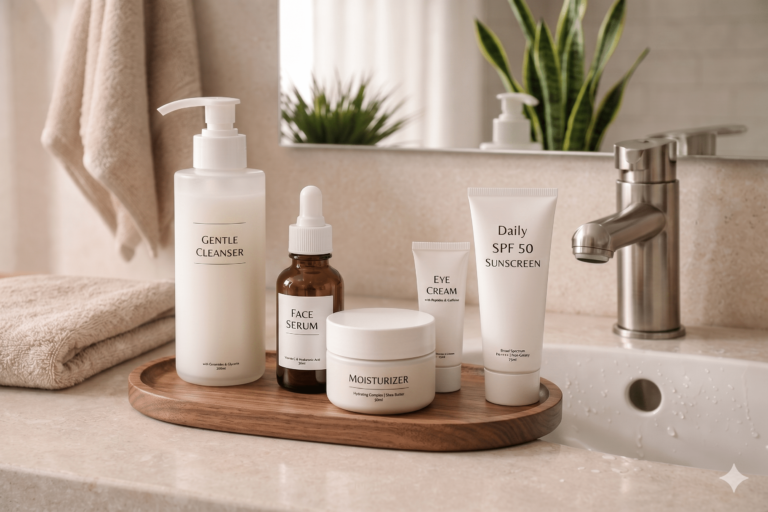
Skincare is often seen as something that requires expensive products and complicated routines. In reality, skin care can be managed with a simple structure that focuses on basic needs: cleansing, moisturizing, sun protection, and targeted treatment. A budget-friendly skincare routine is not about reducing care. It is about selecting the right steps and using products that match skin needs without unnecessary spending.
Skin health depends on consistency more than price. Many affordable products contain the same types of ingredients found in high-cost products. The difference is often branding, packaging, and marketing rather than function.
This guide explains how to build a budget-friendly skincare routine that works, what products to choose, and how to maintain results over time.
Understanding Skin Needs
Every skincare routine should be based on skin needs. Skin functions depend on three main factors:
- Oil balance
- Moisture level
- Skin barrier condition
When these factors are stable, skin appears balanced. When they are not stable, concerns such as dryness, acne, or uneven texture may appear.
A budget-friendly routine focuses on supporting these basic functions.
Why Budget Skincare Can Work
A skincare routine does not need expensive products to be effective. Many affordable products contain:
- Glycerin
- Niacinamide
- Salicylic acid
- Hyaluronic acid
- Ceramides
These ingredients are widely used in both low-cost and high-cost products.
What matters most is:
- Consistent use
- Correct product selection
- Proper routine structure
Step 1: Start With a Gentle Cleanser
Cleansing is the foundation of any skincare routine.
Purpose of Cleansing
- Remove dirt
- Remove oil
- Remove sweat
- Clean skin surface
Budget-Friendly Approach
Affordable cleansers can be found in basic formulations that do not contain unnecessary additives.
A gentle cleanser is used:
- Morning
- Evening
This step helps maintain skin cleanliness without damaging the skin barrier.
Step 2: Add a Simple Moisturizer
Moisturizers help maintain skin hydration and support barrier function.
What Moisturizers Do
- Reduce water loss
- Support skin balance
- Maintain skin comfort
Budget Approach
A basic moisturizer with ingredients like glycerin or ceramides is enough for most skin types.
Moisturizer is applied after cleansing.
Step 3: Use Sunscreen Daily
Sunscreen is one of the most important skincare steps.
Why Sunscreen Matters
Sun exposure can affect:
- Skin tone
- Pigmentation
- Skin texture
Budget-Friendly Choice
Many affordable sunscreens provide basic UV protection when used correctly.
Sunscreen is applied every morning as the final step in the routine.
Step 4: Add One Targeted Treatment
Instead of using multiple expensive serums, a budget routine focuses on one targeted product.
Common Treatment Options
- Niacinamide for oil balance
- Salicylic acid for acne-prone skin
- Vitamin C for skin tone support
How to Use
- Apply after cleansing
- Use once daily or as directed
This step addresses specific skin concerns without increasing cost.
Step 5: Keep the Routine Simple
A budget-friendly skincare routine does not require many steps.
Basic Structure
Morning:
- Cleanser
- Moisturizer
- Sunscreen
Evening:
- Cleanser
- Treatment product
- Moisturizer
This structure is enough for many skin types.
Step 6: Avoid Unnecessary Products
Many skincare products are marketed as essential but are not required for basic skin care.
Examples include:
- Multiple serums with similar function
- Frequent facial masks
- Complex multi-step systems
Reducing unnecessary products helps control cost and simplify routine.
Step 7: Understand Ingredient Function
Knowing ingredients helps make better product choices.
Common Affordable Ingredients
- Glycerin: hydration support
- Niacinamide: oil balance
- Salicylic acid: pore care
- Hyaluronic acid: moisture support
These ingredients are found in many budget products.
Step 8: Focus on Consistency
Skin responds to regular care over time.
Why Consistency Matters
- Skin turnover takes time
- Products require continuous use
- Irregular use reduces effectiveness
A simple routine followed daily works better than a complex routine used occasionally.
Step 9: Adjust Based on Skin Type
Different skin types require different approaches.
Oily Skin
- Use lightweight moisturizer
- Focus on oil control ingredients
Dry Skin
- Use richer moisturizer
- Focus on hydration support
Combination Skin
- Balance oil control and hydration
Budget routines should still match skin needs.
Step 10: Choose Multi-Purpose Products
Multi-purpose products help reduce cost and steps.
Examples
- Moisturizer with hydration support ingredients
- Sunscreen with moisturizing properties
- Cleanser with gentle treatment function
These products simplify routine structure.
Step 11: Avoid Over-Exfoliation
Exfoliation helps remove dead skin cells, but excessive use can damage skin.
Budget Approach
- Use exfoliation only when needed
- Choose mild formulations
Overuse may lead to irritation and additional product costs for repair.
Step 12: Track Product Performance
Tracking helps avoid unnecessary spending.
What to Observe
- Skin response
- Product effectiveness
- Changes in skin condition
This helps decide whether a product should be continued or removed.
Step 13: Build Routine Gradually
A skincare routine does not need to be built all at once.
Step-by-Step Approach
- Start with cleanser and moisturizer
- Add sunscreen
- Introduce one treatment product
This reduces cost and allows skin adjustment.
Step 14: Avoid Trend-Based Buying
Many skincare trends promote products that may not be necessary.
Common Issue
Buying products based on trends can lead to:
- Product overload
- Unnecessary spending
- Confused routines
A budget-friendly routine focuses on function, not trends.
Step 15: Maintain Skin Barrier Health
A healthy skin barrier reduces the need for corrective treatments.
Barrier Support Steps
- Gentle cleansing
- Regular moisturizing
- Avoiding harsh products
Strong barrier function reduces long-term skincare costs.
Step 16: Use Products Correctly
Incorrect usage reduces effectiveness and wastes product.
Proper Use Includes
- Applying correct amount
- Following instructions
- Using products in correct order
This ensures maximum benefit from each product.
Step 17: Avoid Product Switching
Constantly changing products can increase cost and reduce results.
Why Stability Matters
Skin needs time to adjust to products.
A stable routine is more effective than frequent changes.
Step 18: Combine Home Care With Basic Awareness
Understanding skin condition helps improve routine decisions.
Basic Awareness Includes
- Skin type
- Skin sensitivity
- Product reaction
This helps avoid unnecessary purchases.
Step 19: Focus on Prevention
Preventing skin problems is more cost-effective than treating them.
Preventive Steps
- Sunscreen use
- Daily cleansing
- Moisturizing
Prevention reduces need for expensive treatments later.
Step 20: Build a Long-Term Routine
A budget-friendly skincare routine is not temporary. It is a long-term system.
Long-Term Focus
- Consistency
- Simplicity
- Basic ingredients
- Skin protection
Long-term care provides more stable results.
Conclusion
A budget-friendly skincare routine that works is based on simple steps: cleansing, moisturizing, sunscreen, and one targeted treatment. Expensive products are not required for effective skincare. What matters is consistency, correct product use, and understanding skin needs.